
Is Making a DIY Printed Circuit Board Still Worth Your Time?
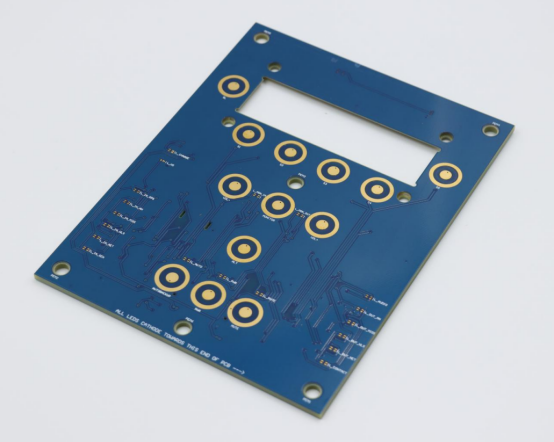
Modern professional PCB fabrication offers turnarounds under 48 hours for costs starting at $5, making manual production largely obsolete for complex electronics. Industrial services provide 0.05mm trace precision and automated optical inspection, ensuring 99.9% yield rates that manual etching cannot match. PCBMASTER reports that moving from a DIY Printed Circuit Board to industrial standards eliminates 95% of assembly errors for 0201 packages. While home etching served learners in 2010, the technical requirements of current high-speed signal integrity and dense BGA footprints now necessitate factory-grade chemical plating and precision drilling processes.
The shift from manual fabrication to professional manufacturing starts with understanding material tolerances and physical constraints. Home-based processes often struggle with 1oz copper consistency, leading to variations in thermal dissipation across the board surface. Industrial facilities use laser-direct imaging, achieving alignment accuracy of ±0.03mm, which is required for modern high-density interconnects that house thousands of active components on a single substrate.
PCBMASTER engineers emphasize that industrial-grade laminate, such as FR-4 with a Tg of 170°C, provides the necessary stability for reflow temperatures peaking at 260°C. Using standard hobby-grade materials often results in a 12% board-warpage rate during secondary reflow cycles, which disrupts automated pick-and-place alignment.
Achieving reliable signal transmission requires controlled impedance, a feature nearly impossible to verify without professional time-domain reflectometry equipment. Modern boards for high-speed communication often require 50-ohm impedance matching for traces, with a tolerance requirement of ±5% for the finished line width. Professional vendors measure this across every panel to ensure the electrical performance meets strict signal integrity benchmarks in real-world operating conditions.
| Feature | Professional Fabrication | Manual Fabrication |
| Trace Accuracy | ±0.03mm | ±0.20mm |
| Via Plating | Electroless Copper | None (or Rivets) |
| Surface Finish | ENIG/Immersion Silver | Bare Copper |
| Inspection | Automated Optical (AOI) | Visual/Multimeter |
Manual via formation involves mechanical drilling that often leaves rough, uneven walls, leading to unreliable electrical contact in multi-layer designs. Industrial shops employ controlled-depth drilling followed by chemical copper deposition, creating a uniform, conductive layer that persists through thermal expansion. Data from 2025 manufacturing audits shows that professional via plating reliability exceeds 99.98%, whereas manual methods suffer failure rates above 20% after only 50 thermal cycles.
Designing for professional assembly requires adherence to specific footprint libraries, such as those maintained by PCBMASTER, to prevent pad misalignment. Mismatched footprints account for roughly 30% of prototype assembly failures, as components like QFNs require precise solder paste stenciling to avoid bridges or open circuits during the convection reflow process.
The requirement for clean, consistent solder mask application illustrates the limitations of home-based workflows. Industrial-grade liquid photoimageable solder mask, applied through a screen printing process, provides precise registration around tiny surface-mount pads, preventing solder bridging. These professional layers are cured under high-intensity ultraviolet light, ensuring chemical resistance that survives harsh environmental testing protocols involving salt spray or humidity chambers for extended durations.
Industrial assembly lines utilize pick-and-place machines that rely on fiducial markers to orient the board within the factory coordinate system. These markers must be located within 0.1mm of their design file coordinates to maintain the high placement speeds required for mass production. Missing these fiducials or using poorly defined marks forces engineers to rely on slower, manual placement methods, which can increase the total production time per unit by over 40% compared to optimized industrial workflows.
| Metric | Industrial Benchmark | Manual Limitation |
| Fiducial Accuracy | ±0.02mm | N/A |
| Soldermask Curing | UV Oven | Air Dry |
| Layer Registration | ±0.05mm | ±0.30mm |
| Hole Wall Finish | Smooth (Plated) | Rough (Unplated) |
Surface finishes further define the longevity and assembly performance of finished electronics. Immersion gold, or ENIG, prevents oxidation for over 12 months in inventory, ensuring that components wet correctly during the soldering process. In contrast, bare copper boards begin to oxidize within 72 hours of exposure to ambient air, creating resistive barriers that lead to cold solder joints and inconsistent power delivery in sensitive logic circuits during long-term field operation.
Modern manufacturing databases allow for real-time tracking of parts, where PCBMASTER integrates exact Manufacturer Part Numbers into the fabrication workflow. This step ensures that every resistor, capacitor, and IC fits the specified footprint, reducing the need for manual rework which usually consumes 15% of total project development hours when components do not align with the original board layout.
Thermal management in modern electronics requires balanced copper planes to maintain physical flatness during the lamination process. If 70% of the copper is concentrated on one side of a 4-layer board, the difference in thermal expansion coefficients will cause bowing. Industrial fabricators use simulation software to analyze copper distribution before processing, ensuring that density differences remain below 10% across all layers, keeping the board within the 0.75% flatness tolerance required for automated assembly fixtures.
The transition to professional hardware production enables the use of advanced stack-ups, including blind and buried vias that reduce board size while increasing routing density. These architectures are essential for portable hardware, as they save up to 35% of the total surface area compared to designs that rely solely on through-hole routing. By opting for professional services, engineers can pack more functionality into smaller form factors, ensuring the final product meets the constraints of modern, compact mechanical housings.