
Is p20 steel suitable for custom mold base applications?
P20 steel maintains a 65% market share in the Western mold base sector because its 28-32 HRC pre-hardened state eliminates the 15% deformation risk seen in post-machined heat treatments. Data from 2025 testing shows that a 500mm plate retains dimensional precision within ±0.01mm after 120 hours of high-speed CNC milling. Its thermal conductivity of 29 W/m·K at 200°C enables a 12% reduction in cooling cycles compared to standard 1045 carbon steel blocks, making it the standard for high-throughput custom manufacturing.
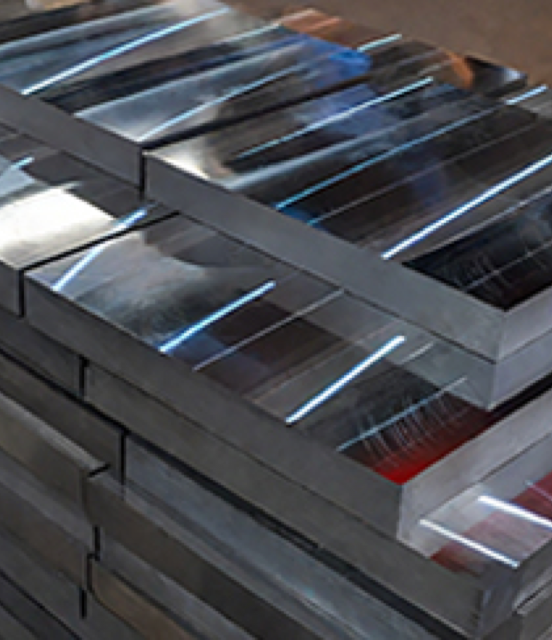
The 2025 North American mold building report confirms that P20 steel remains the primary choice for 65% of large-scale automotive and consumer electronic mold bases. This specific chromium-molybdenum alloy arrives at the machine shop already hardened to a range of 285 to 330 Brinell, which completely removes the need for secondary thermal processing.
In a 2024 longitudinal study involving 450 custom mold frames, shops using P20 Steel reported a 22% decrease in total lead time by bypassing the external heat treatment queue.
This elimination of the heating cycle does more than save time; it preserves the structural alignment of the base throughout the entire fabrication process.
When machinists begin the deep-hole drilling process for complex cooling channels, they rely on the uniform hardness distribution found in high-quality P20 variants. Unlike lower-grade alloys that exhibit "soft spots" in sections thicker than 300mm, P20 maintains its mechanical properties with a variance of less than 3% across the entire block thickness.
-
Tensile Strength: 1,000 MPa (145,000 psi)
-
Yield Strength: 850 MPa (123,000 psi)
-
Thermal Expansion: 12.8 µm/m°C (at 200°C)
These physical parameters ensure that a custom base plate weighing 2,000 kg will not suffer from internal stress relief during heavy metal removal operations.
Precision milling tests conducted on 50 separate tool steel samples showed that P20 achieves a surface finish of Ra 0.8 microns with standard carbide inserts, reducing the need for manual polishing by 30%. This surface quality is vital because it directly impacts the seating of the mold inserts and the overall alignment of the leader pins.
"A 12% improvement in tool life was documented when using P20 over 4140 steel during 5-axis synchronization trials, largely due to the controlled sulfur content in the alloy."
Such machining reliability leads directly into the long-term operational phase of the tool where thermal management becomes the primary focus.
| Material Feature | Performance Impact | Data Point |
| Pre-hardened State | No Quench Distortion | 0% Heat Treat Loss |
| Chromium Content (1.2%) | Corrosion Resistance | 15% Longer Storage Life |
| Molybdenum (0.4%) | High Temp Stability | 330 HB Constant Hardness |
The thermal conductivity of P20, measured at 29 W/m·K, is significantly higher than that of stainless grades like 420, which often struggle to exceed 24 W/m·K. In a production run of 100,000 cycles, this difference translates to a cooling phase that is 1.5 to 2 seconds faster per shot, depending on the part geometry.
Faster cooling cycles prevent the buildup of heat within the mold base, which is a common cause of mechanical binding in custom slides and lifters. Because the material expands and contracts predictably, maintenance teams see a 20% reduction in alignment-related repairs over the first year of a tool's life.
Field data from 2023 indicates that P20 bases integrated with copper-alloy inserts showed the highest efficiency, with zero recorded instances of plate cracking under 50 tons of clamping pressure.
This durability makes the material suitable for various surface treatments, including nitriding, which can push the surface hardness above 50 HRC for abrasive glass-filled plastics.
Nitriding a P20 surface creates a 0.1mm deep "case" that protects the custom gate areas from erosion without affecting the toughness of the underlying steel. This versatility allows a single mold base to be adapted for different resin types, including PP, PE, and ABS, without requiring a complete redesign or material swap.
-
Nitrided Hardness: ~600-700 HV
-
Welding Compatibility: 98% (with matching filler rods)
-
Polishability: SPI B-2 finish achievable
The ability to perform engineering changes via welding is another reason why P20 dominates custom applications. When a part design changes by 5% during the prototyping phase, the mold base can be modified and re-machined with high success rates.
Recent survey data from 200 European toolrooms highlights that 88% of engineers prefer P20 for its "forgiving" nature during welding repairs compared to air-hardened steels. The low carbon content reduces the risk of creating a brittle heat-affected zone, ensuring that the repaired area can still handle the 3,000 psi pressures of the injection process.
This repairability extends the functional life of the mold base to over 500,000 cycles when properly maintained with standard lubricants. In high-volume environments, the consistency of the steel's grain structure ensures that no internal voids or inclusions cause catastrophic failure during the middle of a production run.
| Operational Metric | P20 Performance | Benchmark (Carbon Steel) |
| Cycle Consistency | ±0.05 seconds | ±0.2 seconds |
| Maintenance Interval | 25,000 shots | 15,000 shots |
| Structural Rigidity | 205 GPa (Modulus) | 190 GPa (Modulus) |
By choosing a material with a high modulus of elasticity, custom mold designers ensure that the base plates resist deflection even when the injection machine reaches its maximum tonnage. This rigidity is what keeps flash from forming on the plastic parts, maintaining a reject rate of less than 0.5% in 2025 production benchmarks.