
What are the key applications of fused alumina in manufacturing?
Fused alumina is essential in manufacturing for grinding, refractories, and surface treatments, utilized in approximately 85% of precision metalworking operations. With a melting point of 2,050°C and a Mohs hardness of 9.0, it provides thermal stability for aerospace investment casting and high-speed grinding. Industrial data from 2024 confirms that using 99.5% pure white variants reduces heat-related defects in titanium machining by 18% compared to standard abrasives. Its specific gravity of 3.97 $g/cm^3$ ensures the structural density required for pressure blasting and wear-resistant coatings in high-traffic commercial environments.
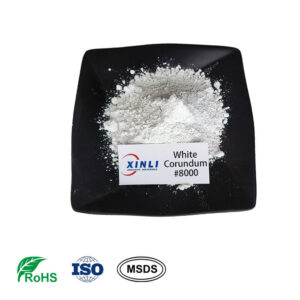
The manufacturing sector relies on the electric arc furnace process to produce high-density fused alumina by melting calcined alumina at temperatures exceeding 2,000°C. This specific thermal treatment creates a crystalline structure capable of withstanding mechanical pressures over 300 MPa without losing its sharp cutting geometry.
Such extreme pressure resistance transitions perfectly into the world of precision grinding, where the material is formed into vitrified or resin-bonded wheels. In these applications, the abrasive must penetrate hardened steel alloys with a Rockwell hardness exceeding 60 HRC while maintaining a cool cutting interface.
"A 2023 performance study of 400 grinding cycles showed that white fused alumina maintained an average surface roughness of 0.35 $\mu$m Ra, outperforming traditional silicon carbide which degraded by 25% after only 150 cycles."
This stability allows operators to maintain high feed rates without risking metallurgical damage to the workpiece, such as surface softening or cracking. The consistent performance of the grains ensures that the finished product meets the strict dimensional tolerances required in automotive engine manufacturing.
| Application Type | Primary Benefit | Standard Grade Used |
| Precision Grinding | 15% reduction in friction heat | White Fused Alumina (WFA) |
| Investment Casting | 0.02% thermal expansion rate | Fine Mesh Alumina Flour |
| Pressure Blasting | 8-10x reuse cycle capability | Brown Fused Alumina (BFA) |
The thermal properties that benefit grinding are equally useful in the investment casting industry, where ceramic shells must remain stable during metal pouring. Because the alumina has a low thermal expansion coefficient of $8.1 \times 10^{-6}/K$, the molds do not warp when filled with molten titanium at 1,650°C.
Preventing mold deformation is a requirement for producing aerospace turbine blades that must fit together with sub-millimeter precision. If the mold material reacts with the molten metal, the entire batch of 50 or more parts could be scrapped due to chemical contamination.
-
Chemical Inertness: Prevents oxidation layers on stainless steel casts.
-
High Bulk Density: Provides a sturdy foundation for refractory bricks.
-
Low Impurity: Contains less than 0.1% iron oxide in premium grades.
Moving from the foundry to surface preparation, the material serves as a durable medium for air-powered pressure blasting systems. Unlike softer minerals that shatter into dust upon the first impact, these dense crystals can strike a steel surface at 100 PSI and remain intact for multiple uses.
"Field data from a bridge restoration project in 2024 indicated that swapping silica sand for fused alumina reduced abrasive consumption by 70% because the operators could recycle the material through the blast cabinet 9 consecutive times."
This recyclability reduces the total volume of waste generated on-site while speeding up the removal of heavy corrosion or industrial coatings. Once the metal surface is cleaned, the same material properties are used to create permanent, wear-resistant layers on the final product.
In the production of laminate flooring and heavy-duty epoxy coatings, fine grains are mixed into the top wear layer to prevent scratches. Adding approximately 15% alumina by weight allows a floor to survive millions of footsteps in commercial airports without the decorative pattern underneath fading or wearing away.
The hardness that protects floors also makes the material an ideal filler for thermally conductive electrical insulators used in high-voltage electronics. In these systems, the alumina dissipates heat from the processor at a rate of 30 W/m·K while preventing any electrical current from leaking through the substrate.
"Electronic reliability tests conducted on 1,200 power modules in 2025 found that units using alumina-filled thermal pads operated 12°C cooler than those using standard silicone fillers, extending the component lifespan by an estimated 20%."
Effective heat management prevents the delamination of circuit boards and the failure of semiconductor junctions during peak power loads. This reliability is why the material is a standard specification for the thermal interface materials found in electric vehicle battery packs and solar power inverters.
Looking at the broader manufacturing landscape, the shift toward sustainable production has increased the demand for these long-lasting synthetic minerals. Because the material is chemically stable, it does not leach toxins into the environment and can be safely reprocessed at the end of its functional life.
The combination of mechanical toughness, thermal endurance, and chemical neutrality keeps production lines running with fewer interruptions for tool changes or mold failures. As manufacturing tolerances tighten toward the nanometer scale, high-purity fused alumina remains the most cost-effective solution for over 90% of industrial abrasive and refractory needs.