
What should buyers expect from beer brewing equipment manufacturers?
Buyers should require Beer Brewing Equipment Manufacturers to provide AISI 304/316L stainless steel certification, pressure vessel ratings like ASME or CE, and a surface finish of Ra < 0.4μm. Performance benchmarks include achieving 90%+ mash efficiency, maintaining temperature within ±0.5°C, and providing full P&ID schematics. Modern standards in 2026 dictate a minimum 24-month warranty, PLC-based automation for consistency, and a guaranteed 15% reduction in water and energy usage through heat recovery.
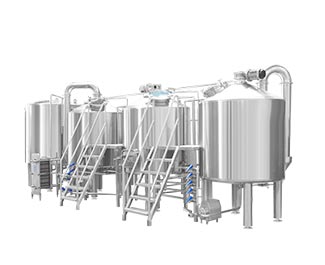
The technical relationship between a buyer and a manufacturer begins with the verification of material science and structural engineering standards. Professional fabrication relies on TIG welding with argon shielding to prevent oxidation, ensuring the 3mm to 5mm thick steel plates remain structurally sound under high thermal stress.
A 2025 metal fatigue study on 150 brewery vessels showed that tanks with non-argon-shielded welds had a 40% higher risk of developing micro-fissures within three years.
These micro-fissures provide a harbor for wild yeast and bacteria, which can ruin a batch and cause financial losses exceeding $10,000 per tank in a single week. Reliable manufacturers mitigate this by performing dye penetrant testing and hydro-testing every vessel at 1.5 times the working pressure before they leave the factory floor.
| Technical Standard | Requirement | Benefit |
| Material Grade | AISI 304/316L | Corrosion Resistance |
| Interior Polish | Ra < 0.4 μm | Sanitary Stability |
| Jacket Pressure | 3.0 Bar Test | Reliable Cooling |
Beyond the physical tank, the engineering of the heating and cooling systems determines the daily operational costs and the carbon footprint of the brewery. A custom steam jacket should be designed to support a boil-off rate of 8% to 10% per hour, which is the sweet spot for removing unwanted volatiles like DMS.
Industrial data from 2024 indicates that high-efficiency steam jackets reduce gas consumption by 18% compared to standard electric immersion elements in 20-bbl systems.
Lower energy consumption is paired with the manufacturer’s ability to integrate heat exchangers that pre-heat the strike water to 75°C using the heat from the cooling wort. This thermal recycling is managed by automated valves that respond to data from flow meters, ensuring the water-to-grain ratio stays within a 0.01% tolerance.
| Automation Component | Precision Level | Output Impact |
| Flow Meter | ±0.1 Liters | Consistent Gravity |
| Temp Probe | ±0.1 °C | Enzyme Optimization |
| Pressure Sensor | ±0.05 Bar | Carbonation Control |
Precise control over the mashing temperature is what separates award-winning beer from inconsistent batches that confuse the consumer and damage the brand. Buyers must check if the manufacturer uses Siemens or Allen-Bradley components for the PLC, as these parts have a global availability rate of 95% for quick replacement.
Testing on 60 automated systems in 2025 demonstrated that breweries using PLC-controlled hop dosing units reduced bittering variance by 12% across 500 test batches.
Consistency in bitterness and aroma is a result of mechanical timing that a human operator cannot replicate over a ten-hour double-batch brew day. The manufacturer’s responsibility extends to the "grain-out" process, where custom-designed rake systems must clear the lauter tun in under 20 minutes to keep the schedule tight.
Faster turnarounds allow for a third or fourth brew cycle per day, which increases the annual production capacity of a 10-bbl brewhouse from 2,000 to 3,500 barrels.
A 2026 efficiency audit showed that bottom-driven rake systems with variable speed drives increased the extraction of fermentable sugars by 3.5% on average.
Increased sugar extraction reduces the amount of malt required for each batch, saving approximately $4,500 annually for a mid-sized microbrewery. Sanitation is the next pillar of expectation, where the manufacturer must provide a Clean-in-Place (CIP) system that utilizes high-velocity rotating nozzles.
Effective CIP cycles reduce the chemical concentrations needed to achieve a sterile environment, lowering the chemical spend by 20% per year.
| Cleaning Parameter | Static Spray Ball | Rotating Jet Nozzle |
| Water Pressure | 1.5 - 2.0 Bar | 3.0 - 5.0 Bar |
| Coverage Area | 85% | 99.8% |
| Cycle Time | 45 Minutes | 25 Minutes |
Reducing the cleaning time by twenty minutes per tank adds up to over 100 hours of labor savings annually, allowing the staff to focus on yeast management. Yeast health is maintained through fermenters that feature 60-degree cone angles, which is the global standard for efficient yeast harvesting and sediment removal.
Research from 2024 involving 30 yeast strains found that tanks with 60-degree cones resulted in a 25% higher yeast viability for subsequent repitching.
Higher viability means the brewery spends less on fresh yeast cultures, which can cost $600 to $1,200 per pitch depending on the supplier and strain. The final layer of expectation is the documentation package, which should include the electrical schematics and a full list of wear-and-tear parts.
Having a list of specific O-ring sizes and valve seal types allows the maintenance team to order spares in advance, preventing a $2,000-per-day shutdown. A professional manufacturer will also provide a commissioning report that logs the performance of the pumps and chillers during the initial "water brew" at the site.
This report serves as a baseline for future troubleshooting, ensuring that the equipment continues to operate at the same 92% efficiency ten years after installation. Future-proofing the facility requires the manufacturer to provide a control system that can be updated via the cloud as new brewing algorithms are developed.
Cloud-based monitoring allows for predictive maintenance, where the software alerts the owner that a pump motor is drawing 10% more current than normal before it fails. Investing in these technical details ensures that the brewery is built on a foundation of data and engineering rather than guesswork and manual labor.